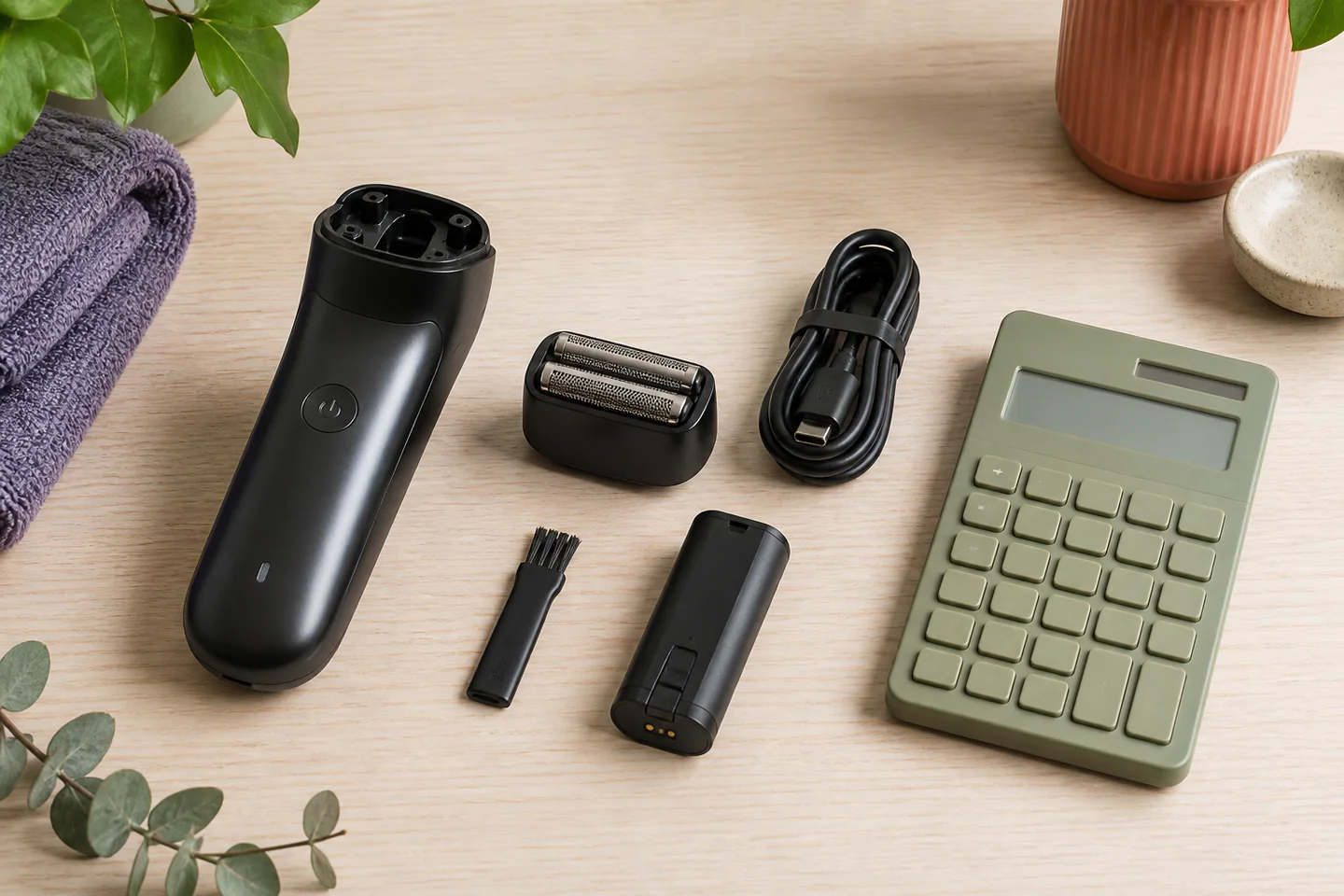
The shelf price of a personal-care device rarely represents its complete cost. Replacement heads, blades, batteries, cleaning supplies, chargers and repairs can exceed the initial difference between two models. A fair comparison converts these expenses into an expected cost over a realistic period and combines that figure with comfort, maintenance effort and parts availability.
Define the use scenario first
Estimate how many people will use the device, how often it will operate and which attachments are genuinely required. A trimmer used twice a week and an electric brush used several times every day have different wear patterns. Use a cautious ownership period based on support and repair prospects rather than selecting an optimistic number that makes every option look inexpensive.
Record the essential performance conditions. If a cheaper model cannot achieve the needed result comfortably, its low total is irrelevant. Likewise, a premium feature should not enter the calculation when it will never be used. The cost comparison begins only after unsuitable options have been removed.
List every recurring item
For each candidate, identify replacement heads, foils, blades, guards, filters, cleaning cartridges, lubricant or other required supplies. Note the recommended interval and the price of an appropriate pack. Then calculate how many replacements the intended period is likely to contain. If usage affects the interval, show a reasonable range instead of pretending to know an exact figure.
Separate required consumables from optional convenience items. A proprietary cleaning station may save time while adding cartridges and counter space; manual cleaning may cost less while requiring more effort. Both are valid only when the comparison states the trade-off. Do not count a generic accessory as compatible until its dimensions and intended use are confirmed.
Include energy, battery and charging
Electricity is often a small part of the total for compact care devices, but the charger and battery can determine useful life. Check whether a lost charger can be replaced, whether a common connector is used and whether the battery has a repair route. A sealed battery is not automatically unacceptable, yet its expected decline should be reflected in the ownership period.
Consider travel requirements. An extra cable, adapter or protective cap adds cost and complexity. A device with a clear charge indicator may avoid emergency replacements or an unnecessary spare. When two candidates have similar direct cost, predictable charging can be a meaningful practical advantage.
Value cleaning time and maintainability
Estimate the minutes required after each use and for occasional deeper cleaning. Multiply by realistic frequency to understand the annual effort. Time is not converted into money to create artificial precision; it is recorded so that a low-cost option with a difficult routine is not presented as an obvious winner.
Inspect how components detach, dry and return to storage. Parts that trap hair or residue may wear faster if cleaning is routinely postponed. Look for diagrams, identifiable replacement references and support information. Repairability includes the ability to diagnose a common problem and obtain a small part, not only the theoretical possibility of opening the case.
Build a transparent three-year example
Create a table with the purchase price, expected consumables, one plausible accessory replacement, maintenance supplies and any paid warranty or repair provision. Add a low and high estimate when intervals are uncertain. Divide by expected uses only after the total has been assembled. Cost per use can make a durable item easier to compare with a cheap product that wears quickly.
Keep the source and date of each price in personal notes because consumable prices change. The published decision should focus on the method and assumptions, not imply that a temporary price is permanent. If the result changes completely after a small assumption changes, the options are financially close and comfort or parts support should decide.
Use a balanced final score
Combine total cost with performance, skin comfort, cleaning effort, noise, storage and availability of essential parts. Make minimum conditions non-negotiable. A device that irritates the user or lacks the required adjustment should not win through a numerical average.
The best long-term value is usually easy to maintain, supported by obtainable components and comfortable enough to use consistently. A transparent total-cost worksheet prevents the initial price from dominating and reveals which premium features reduce real effort—and which simply make the package look more complete.
Calculate the UK cost per useful year
Use the VAT-inclusive price in pounds and add the local cost of replacement heads, cutters, foils, cleaning cartridges and batteries at credible intervals. Electricity is usually a smaller line than consumables and premature replacement, but it can still be shown transparently. Avoid converting every uncertainty into a falsely precise monthly number; a low and high ownership range is more honest.
Confirm that the exact UK model has obtainable parts and a workable service route. Record whether a battery is replaceable, what the warranty actually covers and who pays to return the device. The best-value option is not necessarily the cheapest purchase: it is the device that performs the required job, remains hygienic and can be maintained without disproportionate cost.