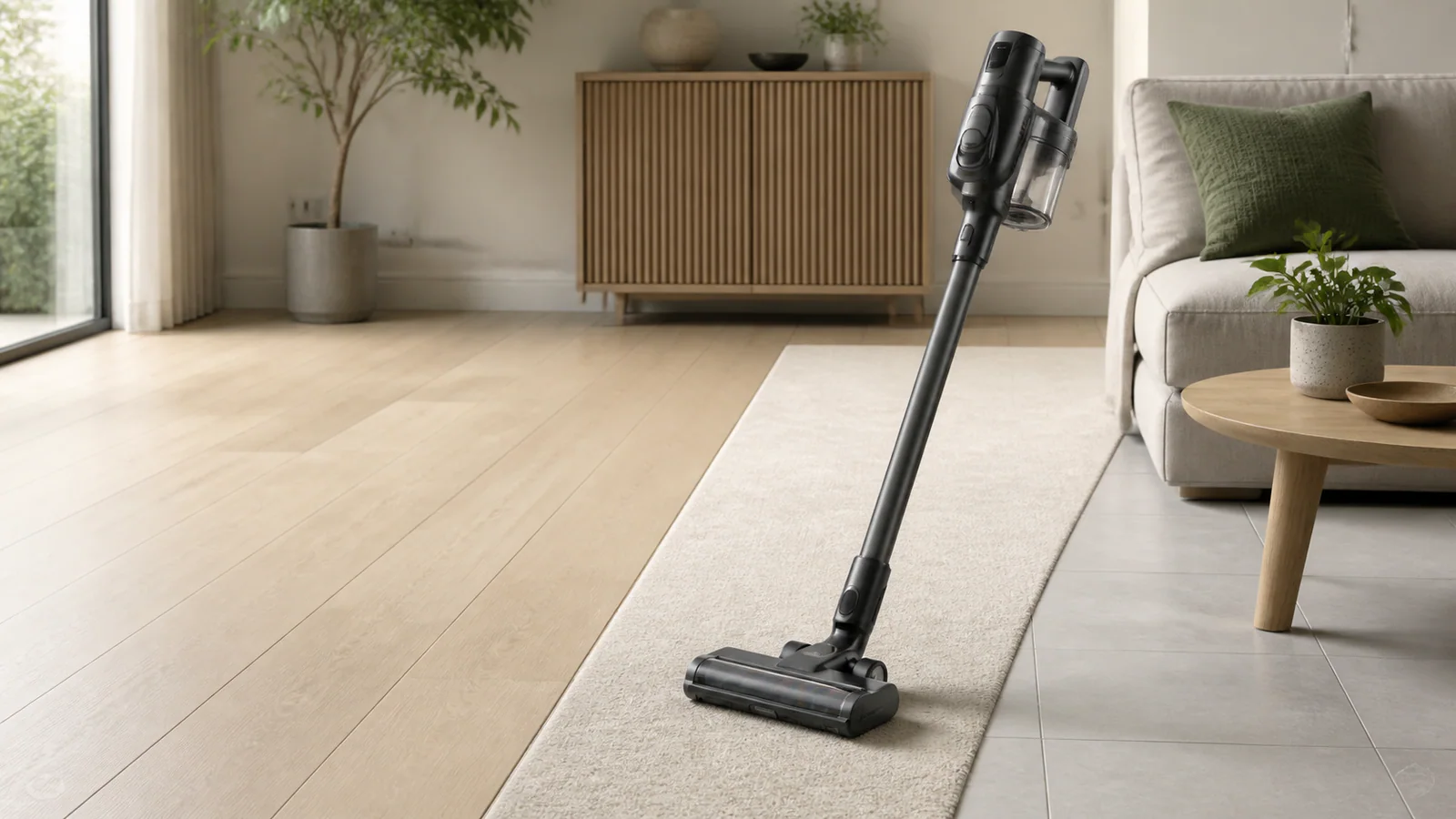
A vacuum cleaner is not simply “good” or “bad.” It is suitable, or unsuitable, for the surfaces, size and routines of a particular home. Starting with a list of attractive features often leads to paying for accessories that remain in a cupboard while overlooking how the main floor will actually be cleaned. A stronger decision begins with a short inventory: which surfaces occupy the home, where does debris collect, and what currently makes cleaning difficult?
Map the floors before comparing machines
Estimate the proportion of wood, tile, vinyl, low-pile carpet and deep carpet. On hard flooring, the head needs to collect fine particles without pushing larger pieces away or marking a delicate finish. On carpet, the brush needs to move fibres without making the head uncomfortably difficult to push. Transitions matter too. A machine that works well on boards but struggles with two rugs placed in busy areas can become frustrating in everyday use.
Add obstacles to the map: closely spaced chair legs, low furniture, stairs, thresholds, cables and narrow corners. Head shape, tube articulation and carrying comfort can matter as much as claimed power. Measuring the clearance under furniture and the width of tight passages can prevent a disappointing surprise after purchase.
Choose an architecture that matches the routine
A canister vacuum remains useful when long sessions, stable power and larger capacity are priorities. A cordless stick encourages short, frequent passes but makes weight in the hand, usable runtime and storage more important. A robot can maintain an uncluttered surface regularly; it may not replace cleaning stairs, corners, upholstery or crowded rooms. A main appliance and any secondary machine should form a coherent system rather than a redundant collection.
Interpret suction claims carefully
A single number does not describe the whole cleaning result. Airflow, the sealing of the path, head design and filter condition all influence performance. For hard floors, look for a head that stays close to the surface while allowing larger debris to enter. For carpet, an adjustable airflow or brush speed can help balance collection with manoeuvrability. A powered brush may help with fibres and hair, but it should be easy to open and clean.
Quality is not limited to the first pass. A bin that fills quickly, a filter that clogs or a roller that traps hair can reduce performance over time. Examine the whole path: entry at the floor head, tube, separator, bag or bin, filter and exhaust.
Consider filtration, sound and physical comfort
In a dust-sensitive household, filtration only works as intended when the complete air path is properly sealed. A capable filter inside a housing that leaks allows some air to bypass it. Check how the bin is emptied, whether the filter is washable or replaceable, how long washed parts must dry and whether replacements are reasonably obtainable. Anyone with a specific allergy or respiratory concern should follow advice from a qualified health professional; a cleaning appliance is not a substitute for medical care.
Sound should be judged in context. A quieter machine may be easier to use around remote work, young children or early schedules, but perceived tone matters as well as a stated measurement. Comfort also includes handle shape, balance, the effort required to push the head and the way the machine rests when the session is interrupted.
Size cordless runtime for normal conditions
Estimate the usual length of a cleaning session and add a sensible margin. High-power modes, powered heads, battery age and extreme temperatures can reduce available runtime. A replaceable battery can extend the useful life of the appliance if the format and replacement price remain accessible. Charging time and the availability of storage near a socket also affect whether the machine fits the home.
Assess maintenance before purchase
Ask whether you can remove hair from the brush, wash or replace the filter, clear the tube and order wear parts without a complicated procedure. A demonstration of bin emptying is often more useful than a long list of modes. Documentation should clearly identify maintenance intervals and components that must not be washed. A slightly less dramatic product that is easy to maintain may preserve consistent airflow for longer.
A seven-question decision sheet
- Which surface covers the largest part of the home?
- Which rugs, thresholds, stairs or low furniture complicate cleaning?
- Are sessions long, or short and frequent?
- What weight remains comfortable after several minutes of use?
- How are the bin and filter handled, and where will washed parts dry?
- Can batteries, bags, filters and brushes be obtained separately?
- Do storage and charging genuinely fit the available space?
Compare products only after answering these questions. Options that do not suit the floors or routine can then be removed quickly, leaving a smaller group to compare for durability, comfort and ownership cost. This method rarely produces the most spectacular choice. It is more likely to identify the machine that will actually be used and maintained.
Apply the method to a UK home
For a UK comparison, map the actual mix of fitted carpet, hard flooring, rugs and stairs rather than relying on a generic floor label. Compact terraces, flats and older houses can make turning space, storage and carrying comfort unusually important. Measure narrow landings and low furniture, then check whether the floor head and tube can reach them without forcing an awkward posture.
Compare the VAT-inclusive purchase price in pounds together with the local cost of bags, filters, batteries and brush rolls. Confirm that the supplied charger and plug are intended for the UK market and that replacement parts can be obtained through a practical domestic channel. A long warranty is less useful when a heavy appliance must be shipped abroad or a routine wear part is unavailable.