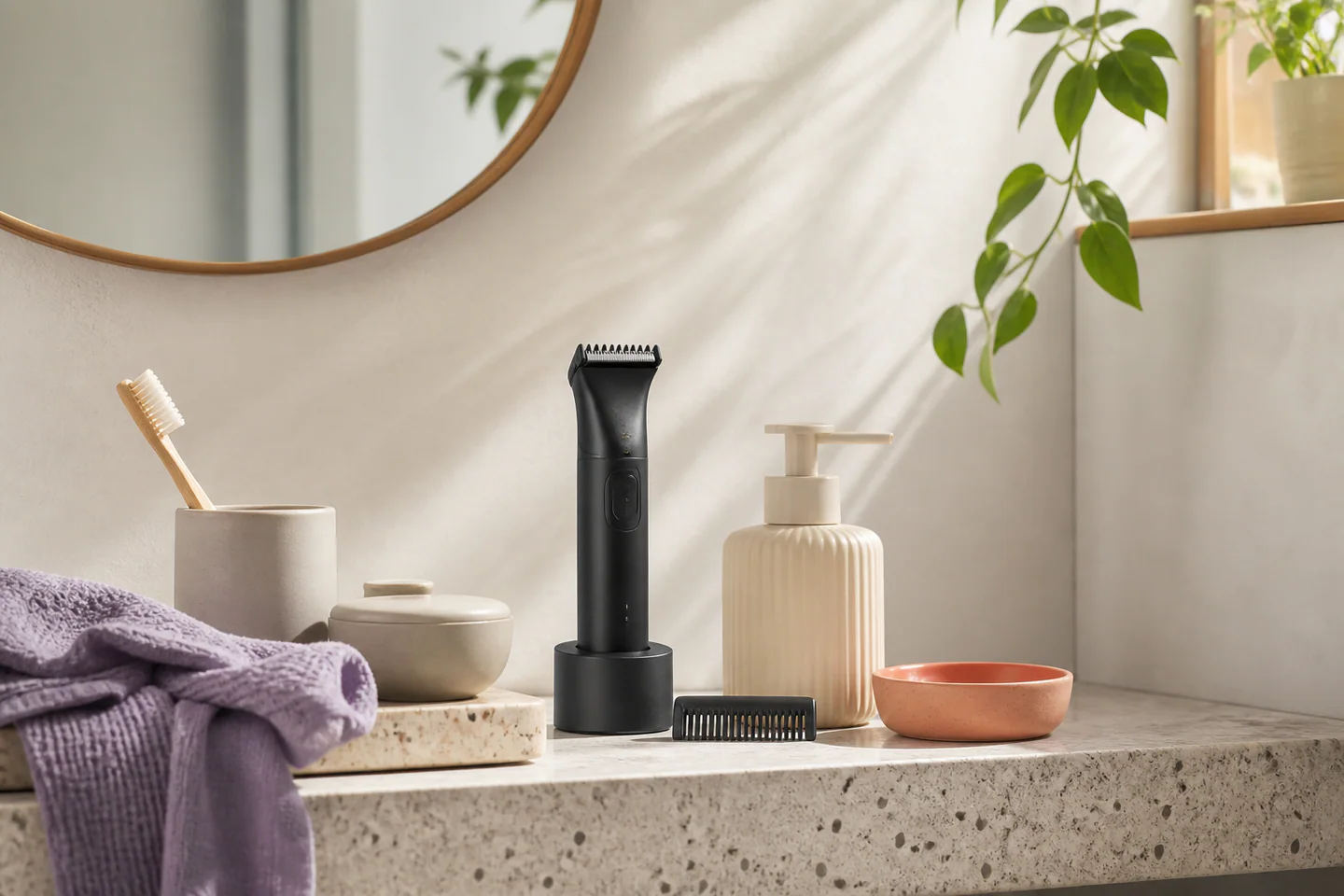
A grooming device should be selected for the result, body area and frequency of use—not for the number of accessories shown on the box. A precise beard edge, a quick uniform trim and comfortable body grooming place different demands on blades, guards and handling. Defining those jobs first makes it easier to compare devices that will remain comfortable, cleanable and maintainable.
Describe the intended result
Write down the lengths and finishes used most often. Fixed guards can be simple and robust, while an adjustable comb offers more steps with fewer loose pieces. Very close work may require a separate finishing head, but every additional head adds cleaning and storage. Choose the smallest set that covers recurring needs and treat unusual styles as secondary.
Consider the area being groomed. Face, scalp and body can differ in skin sensitivity, hair density and required control. A device advertised for several zones is useful only if its instructions, guard design and cleaning method suit those zones. Do not assume that a powerful motor alone guarantees comfort. Blade geometry, guard stability and the ability to move without pinching are just as important.
Evaluate handling and adjustment
The device should be easy to hold in the positions used at home. Examine weight, balance, grip and the location of the switch. A long session magnifies a small ergonomic problem. Length controls should remain locked during use and be readable without guesswork. Loose guards or a dial that moves accidentally can spoil the result even when cutting performance is good.
Look at access around the ears, under the nose and along contours. A narrower head can improve precision but may take longer on a large area. A broad head works quickly but can feel awkward for detail. The right compromise depends on the main task. If possible, handle the device switched off and practise changing guards, because these actions reveal more than a feature count.
Match power and battery behaviour to the routine
Runtime should comfortably exceed a normal session with a reasonable reserve. More important than a very large advertised number is predictable behaviour: a useful charge indicator, stable performance near the end and a charging time that fits the routine. Check whether the device can operate while connected to power and whether the instructions allow that use safely.
For travel, examine the charger size, voltage support, connector type and travel lock. A proprietary cable is not automatically a poor choice, but losing it may make the device unusable. Include the replacement price and availability in the comparison. If the battery is not replaceable, the expected support period and repair route deserve additional weight.
Make cleaning part of the purchase decision
Hair accumulates around blades and beneath removable heads. Review the actual cleaning sequence: what detaches, what can be rinsed, which brush is needed and how long pieces must dry before reassembly. Water resistance can simplify care, but it does not mean every component should remain wet or that the device can be charged near water.
Check whether the blades require oil and how frequently. A maintenance step is acceptable when it is clear and quick; it becomes a problem when instructions are vague or supplies are difficult to find. Skin comfort depends on clean, aligned and undamaged cutting parts. Replace a chipped guard or worn blade instead of compensating with pressure.
Compare ownership cost and parts
Add the device price, likely replacement heads, guards, lubricant, cleaning supplies, charger and battery or repair cost. Confirm that essential parts have identifiable references and can be obtained separately. A modest device with available blades may offer better long-term value than a premium model that must be discarded when one small component fails.
Storage also affects durability. Guards kept loose in a drawer are easily lost or bent. A ventilated case or organised tray protects the cutting edge while allowing cleaned parts to dry. Count only accessories that will be used, and value a well-designed storage solution more than a large collection of duplicate pieces.
Use a short final checklist
Confirm the main zones, usual lengths, handling, runtime, charging, cleaning steps and parts availability. Then compare no more than a few models that satisfy every essential condition. The best grooming device is the one that produces the intended result without discomfort, can be cleaned immediately after use and still has a realistic maintenance path several years later.